
Main Street’s Digital Mandate:
What Voters Expect from Policymakers
How Americans View Digital Tools, Innovation, and the Risks of Regulation
As Congress and state legislatures advance new digital regulations—from privacy rules to ad taxes and platform restrictions—voters see the real-world costs landing on Main Street. Small businesses, consumers, and local economies would feel the impact. To understand these concerns, Internet for Growth partnered with Echelon Insights to survey 1,030 likely voters nationwide from September 5–7, 2025 (±3.4%).
Internet for Growth is a nationwide coalition of small businesses, entrepreneurs, and creators who rely on digital advertising to reach customers and grow. We commissioned this research to clarify what’s at stake. The findings are clear: voters view digital tools as lifelines. Majorities across party lines say these tools are essential for small business survival, local commerce, and consumer choice—and they are less likely to support lawmakers who make it harder for local businesses to compete online.
Key Insights
How Small Businesses Thrive in the Modern Economy
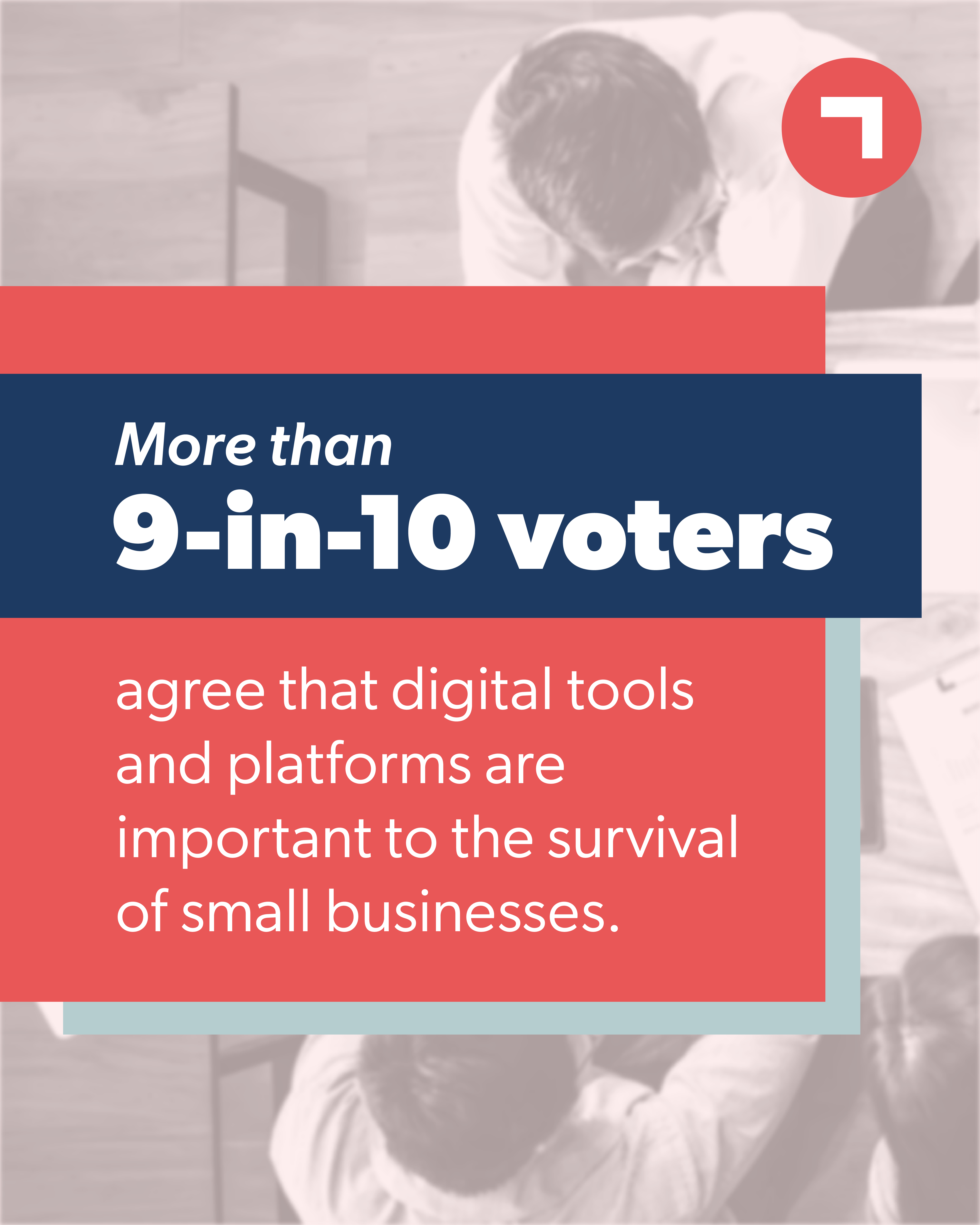
Voters overwhelmingly agree that digital tools are now the backbone of Main Street commerce. Nearly nine in ten say almost every business depends on them to succeed — from online advertising and social media to e-commerce and payment platforms. Across cities, suburbs, and rural communities alike, voters see these tools as essential for promotion, payments, and customer discovery. They also agree that raising the costs of digital tools would directly harm local businesses and slow community growth.
Voters Across Parties Reject New Digital Regulation
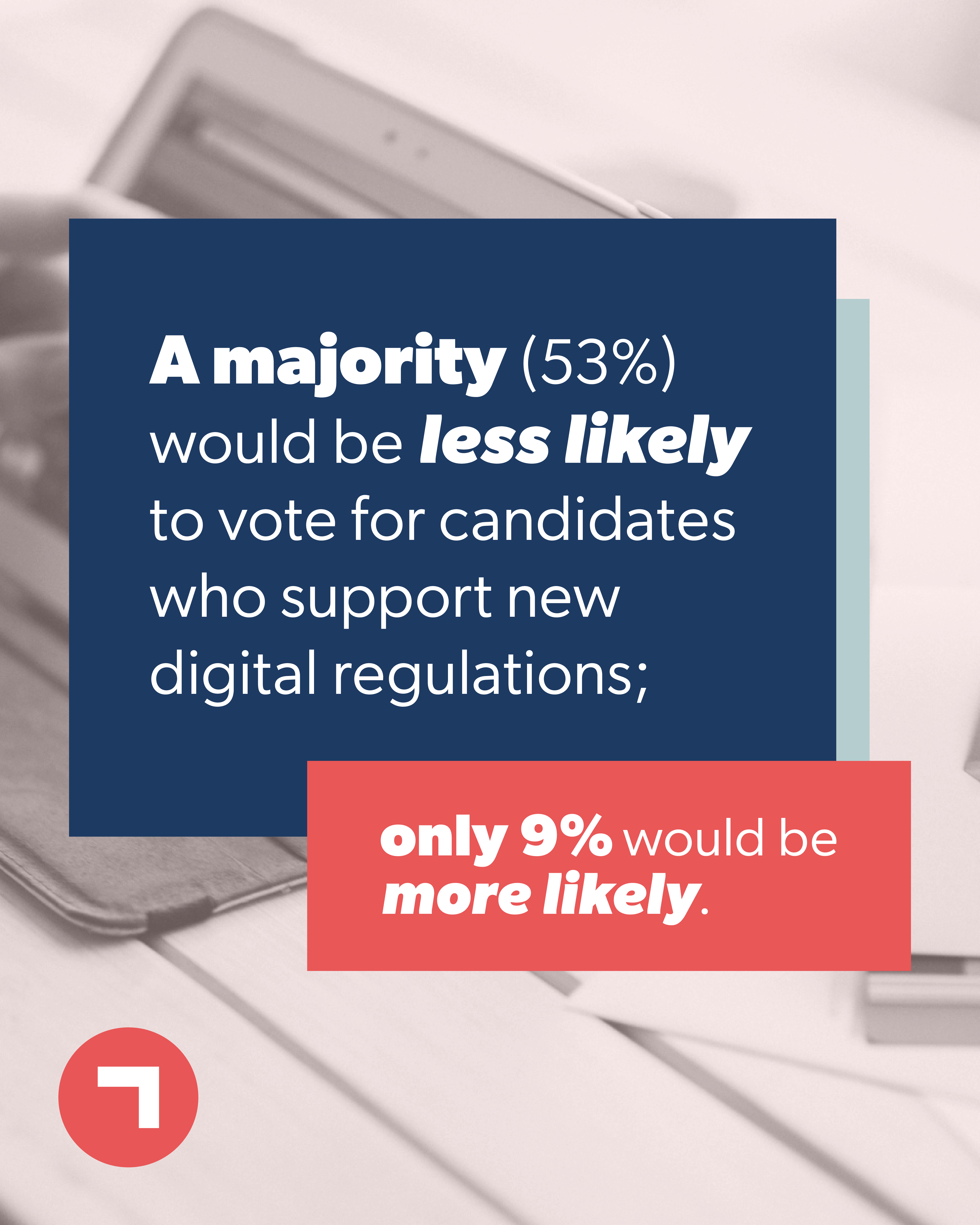
In an era of deep political division, digital regulation stands out as a rare point of agreement. Majorities of Republicans, Democrats, and Independents say they would be less likely to support candidates who vote to increase regulation of digital tools — including new advertising taxes that raise costs for small businesses. Overall, 53% of voters oppose additional regulation, while just 9% favor it. Even among Trump and Harris voters, opposition runs strong, underscoring a clear bipartisan warning to policymakers.
%
say personalized ads help them find local businesses. Voters see tailored advertising as a lifeline for discovery — connecting people with new shops, products, and services that power small-business growth and strengthen community economies.
%
agree limiting ads risks reducing access to free online content. Advertising keeps online information and services affordable. When ads are restricted, voters say families and small businesses face fewer free options and higher everyday costs.
%
say rules for “Big Tech” could also affect small businesses. Voters reject the idea that new regulations stop at Silicon Valley — they see direct consequences for entrepreneurs, local shops, and the customers who rely on them.
%
say they’d worry if higher ad costs forced small businesses to cut back or close. Voters understand that new regulations can have real consequences — threatening local jobs, limiting growth, and undermining the businesses that sustain neighborhoods nationwide.
%
oppose new digital advertising taxes and regulations, and most prefer one consistent federal approach. Voters want clarity, not confusion. They reject new state-level taxes or rules that raise costs, preferring a single national data privacy standard that keeps compliance simple and affordable.
Explore the full results in “Main Street’s Digital Mandate.” See how voters view digital tools, innovation, and regulation — and what it means for small businesses and the future of online growth.
Small businesses rely on digital advertising to reach customers and create jobs — but new regulations threaten that progress. Take action now to help protect innovation, opportunity, and local growth.